
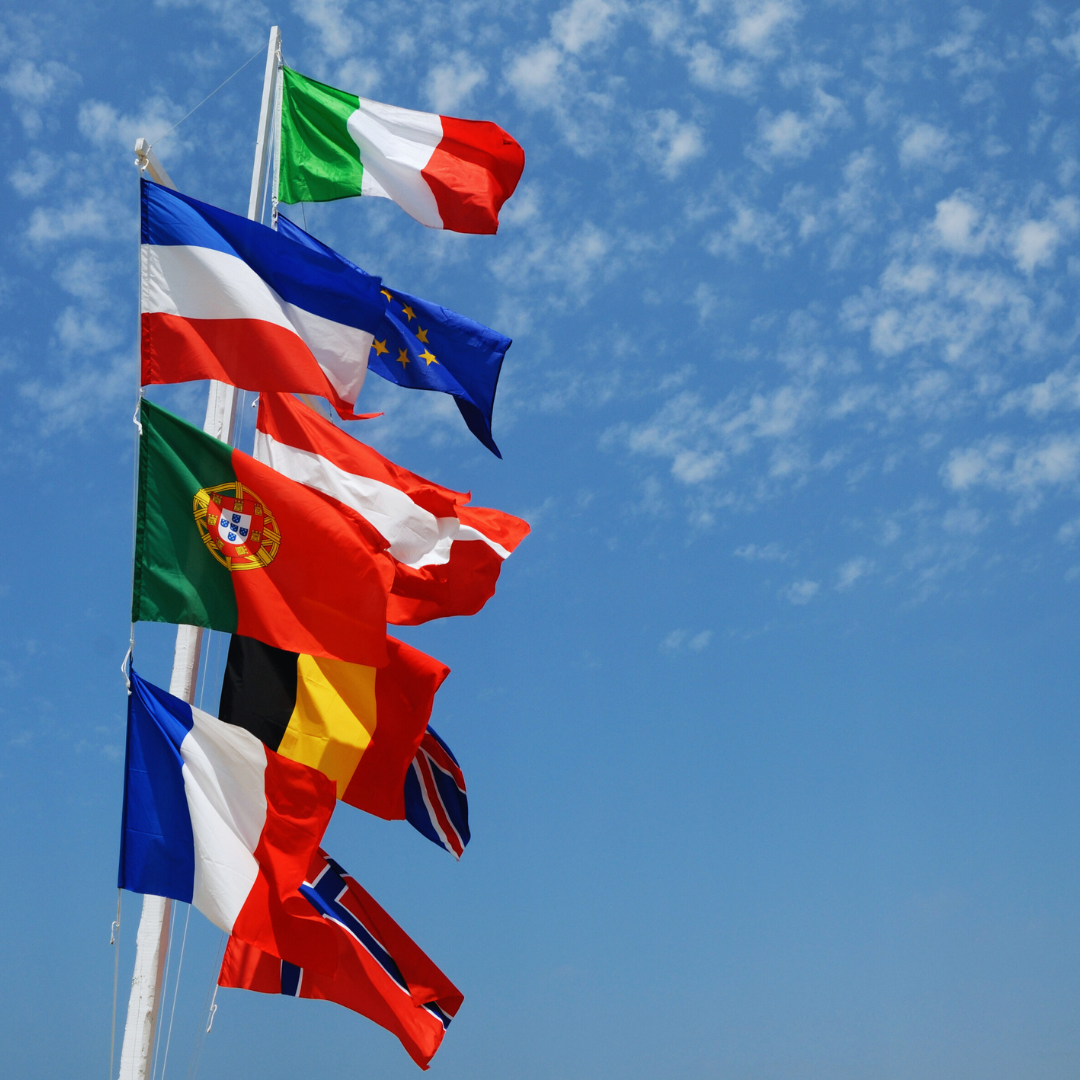
European unification movements have shaped the continent’s political, economic, and social landscape over the last century. These movements aim to bring together diverse nations under shared institutions and common goals to promote stability, cooperation, and peace.
Students should know that European unification is a complex process driven by historical events, economic interests, and political cooperation aimed at reducing conflict and increasing prosperity across member states. Understanding this helps explain why countries choose to collaborate and how these efforts impact daily life, from travel to trade.
Recognizing the key milestones and challenges of European unity provides valuable context for current affairs in Europe. It also highlights how regional integration efforts influence global politics and the future of international relationships.
Fundamental Concepts of European Unification Movements
European unification movements revolve around ideas that unify people politically and culturally. These movements often highlight the importance of shared history, language, and cultural symbols to build a collective national identity.
Defining National Unification
National unification involves the process of bringing together separate states or regions into a single nation. It focuses on political consolidation, creating centralized governance from previously fragmented territories.
Key examples include the unifications of Germany and Italy in the 19th century. These efforts often required overcoming internal divisions and external opposition. National unification aims to establish sovereign statehood based on common ethnic or cultural backgrounds.
The Role of Nationalism and Cultural Nationalism
Nationalism is the belief in the distinctiveness and importance of a particular nation, emphasizing loyalty to one’s country. It often acts as the driving force behind unification movements, providing motivation for political and social integration.
Cultural nationalism specifically stresses cultural heritage, language, and traditions as the foundation of national identity. It supports political nationalism by creating a shared cultural framework to unite people beyond political borders. Both forms contribute to building collective identity and legitimize nation-building.
Cultural Revival and National Identity
Cultural revival refers to efforts that renew interest in traditional customs, languages, and arts linked to a nation’s past. This revival reinforces national identity by strengthening people’s awareness of their cultural roots.
Examples include the revival of Celtic languages in Ireland and the promotion of folk traditions in Eastern Europe. Such movements help bind communities emotionally to the nation, providing a sense of belonging that complements political unification. Cultural revival thus functions as a vital tool for sustaining a unified national identity.
Italian Unification: The Risorgimento
The Risorgimento marked the consolidation of fragmented Italian states into a unified kingdom. It involved revolutionary ideals, diplomatic maneuvering, and military campaigns. Key leaders influenced its success while dealing with regional divides and external powers.
Key Figures and Leaders
Giuseppe Mazzini was a leading ideologue promoting republican nationalism. He founded Young Italy to inspire youth toward unification and independence.
Count Camillo di Cavour, Prime Minister of Sardinia-Piedmont, played a crucial role in diplomacy and statecraft. He aimed to unify Italy under the House of Savoy and used realpolitik to achieve this.
Giuseppe Garibaldi was a military leader known for his Expedition of the Thousand in 1860, which seized southern territories and contributed significantly to unification.
Victor Emmanuel II, King of Sardinia-Piedmont, became the first king of a united Italy in 1861, symbolizing the monarchy’s central role in the Risorgimento.
Major Events and Milestones
The 1848 revolutions sparked early attempts for Italian unity but largely failed. They set the stage for further efforts.
The Second Italian War of Independence (1859), led by Sardinia-Piedmont and supported by France, resulted in the defeat of Austrian control over Lombardy.
In 1860, Garibaldi’s volunteer army conquered the Kingdom of the Two Sicilies, which he later handed over to Victor Emmanuel II.
The official proclamation of the Kingdom of Italy in 1861 marked a political milestone, though Venetia and Rome were not yet included.
Diplomatic Negotiations and External Alliances
Cavour’s alliance with France during the 1858 Plombières Agreement was pivotal. France agreed to support Sardinia against Austria in exchange for Nice and Savoy.
Diplomacy was key to isolating Austria and gaining international support. Cavour skillfully balanced relationships with France and Britain.
Later, Italy allied with Prussia during the Austro-Prussian War (1866), gaining Venetia as a result.
The complex role of France, especially under Napoleon III, affected the pace and nature of unification, particularly due to French protection over the Papal States.
Challenges and Regional Divides
Italy’s unification faced significant regional differences. Northern industrial regions contrasted with the agrarian South.
Cultural, economic, and political divides caused tension, often referred to as the “Southern Question.”
The Papal States remained a stronghold of opposition due to the Pope’s temporal power and French military support.
Unifying various laws, languages, and administrations across the peninsula presented ongoing challenges for the new kingdom.
German Unification and the Rise of the German Empire
The unification of Germany in the late 19th century reshaped the political landscape of Europe. Key factors include the strategic actions of Otto von Bismarck, Prussia’s military campaigns, and the establishment of a new empire that shifted the balance of power on the continent.
Otto von Bismarck and Realpolitik
Otto von Bismarck, the Prussian Chancellor, used Realpolitik—a pragmatic, power-focused approach—to achieve unification. He prioritized national interests over ideology and diplomacy.
Bismarck skillfully manipulated European rivalries to isolate Austria and France. He pursued three wars: against Denmark, Austria, and France, each designed to increase Prussian influence. His ability to use diplomacy and war strategically made unification possible without broad democratic support.
He also believed in strengthening the monarchy and limiting parliamentary power to maintain order. His policies shaped the modern German state through practical, sometimes ruthless, political maneuvers.
Prussia’s Leadership and Military Campaigns
Prussia led the unification effort through military strength and efficient administration. The Prussian army was well-trained and technologically advanced, notably with the use of railways for rapid troop movement.
Three key conflicts defined Prussian leadership:
- Danish War (1864): Prussia and Austria defeated Denmark to control Schleswig and Holstein.
- Austro-Prussian War (1866): Prussia defeated Austria, excluding it from German affairs.
- Franco-Prussian War (1870-1871): Victory over France rallied German states to join a unified Germany.
Prussia’s military success was crucial in convincing other German states to support unification under its leadership.
Creation of the German Empire
The German Empire was proclaimed on January 18, 1871, at the Palace of Versailles. King Wilhelm I of Prussia became Kaiser, symbolizing a new political entity.
This empire united numerous German-speaking states under Prussian dominance. It blended federal and monarchical elements, with the Kaiser holding significant power while states maintained some autonomy.
Bismarck crafted a constitution that centralized control while balancing the interests of the various German states. The empire soon became the strongest power in Central Europe, shifting the continental balance.
Political and Social Consequences
Unification altered Europe’s power structure, challenging France and Austria and disturbing previous alliances. The German Empire emerged as a major industrial and military power.
Domestically, unification advanced economic integration and nationalism. However, it also intensified tensions between liberals, conservatives, and socialists, leading Bismarck to implement policies like the Anti-Socialist Laws.
The strong central government emphasized loyalty to the Kaiser and promoted militarism. These changes influenced European diplomacy and contributed to the conditions preceding World War I.
Legacy, Modern Impacts, and the European Union
The unification movements in Europe reshaped the continent’s political landscape, altering power structures and influencing political alliances. Their legacy is visible in current international policies and integration efforts, especially within the framework of the European Union.
Shifting Balance of Power in Europe
European unification significantly altered the regional balance of power. The consolidation of Germany and Italy in the 19th century created strong nation-states that challenged existing powers like Austria-Hungary and France. This shift contributed to tensions leading to World War I.
Post-World War II, efforts to unify Europe aimed to prevent future conflicts by promoting cooperation over rivalry. The resulting balance moved from military competition toward economic and political partnership, reducing the dominance of unilateral power blocs.
Influence on Other Unification Movements
Europe’s unification experiences influenced other global integration efforts. The processes showed that economic interdependence and shared governance could increase stability. Movements in Africa and Latin America, for example, studied European models when developing regional organizations.
However, European unification also revealed challenges such as nationalism and sovereignty concerns. These lessons remain relevant for modern movements attempting to balance unity with local identities.
Evolution Toward the European Union
The European Union (EU) traces its origins to post-war unification projects like the European Coal and Steel Community. This gradual integration expanded into an extensive political and economic union.
Today, the EU has 27 member states with shared policies on trade, freedom of movement, and governance structures like the European Parliament. The EU remains a key example of successful regional unification, influencing global politics and economics.
|
Key Milestones |
Description |
|
1951 |
European Coal and Steel Community |
|
1993 |
Formation of the EU (Maastricht Treaty) |
|
Present |
27 member states, common market, political cooperation |
Leave a Reply